Chat-AI for PortfolioIQ
Designing a conversational intelligence layer that lets analysts and partners query their entire portfolio in plain English, no exports, no dashboards, no waiting.
A story of turning manual, Excel-heavy workflows into instant, data-grounded conversations.
Introduction
PortfolioIQ is an investment intelligence platform used by analysts and partners to track and act on portfolio company data. The platform already had strong company profiles and a data collection pipeline, but extracting insight from that data still required manual work.
Analysts who wanted to answer a simple question. "Which of our companies grew ARR fastest last quarter?", had to export to Excel, build pivot tables, and format charts before sharing a single number. Partners had no self-service path at all.
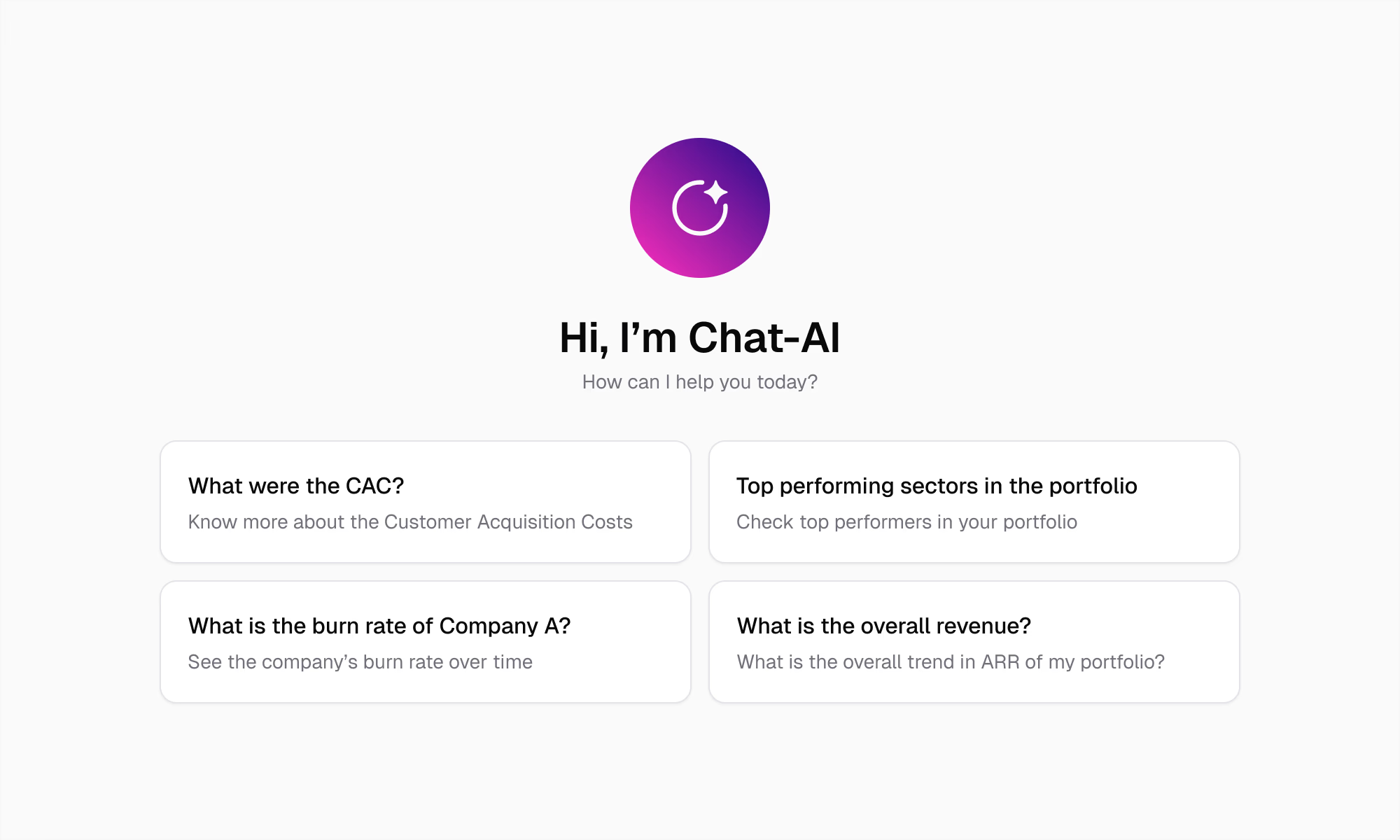
Chat-AI is the conversational layer we built on top of that data. Ask a question in plain English. Get a structured, data-grounded answer, with charts, breakdowns, and follow-up capability, in seconds.
Problem
The data existed in PortfolioIQ. The problem was access. Getting answers required knowing where to look, how the schema was structured, and how to build a query, skills analysts had, but not partners, and not in the middle of a meeting.
The problem had three distinct layers, each pointing at a different kind of failure in the existing experience.
Analysts were stuck in export loops
Every data question meant leaving PortfolioIQ, opening Excel, and rebuilding context from scratch. By the time an analyst had an answer, the meeting had moved on. The cycle was slow enough that many questions simply went unasked.
Partners had no self-service path
Every insight request from a partner or LP required an analyst to generate a custom report. This created bottlenecks around reporting cycles and made partners dependent on analyst availability rather than the platform itself.
Data-driven decisions weren't happening in real time
Without a fast way to query the portfolio, analysts defaulted to intuition or recalled numbers in meetings. The data infrastructure existed, but it wasn't accessible at the speed decisions were made.
"The data was all there. The bottleneck was the interface between the data and the decision."
Research & Context
I ran structured sessions with three analysts and two partners, focusing specifically on moments where they needed data but couldn't get it fast enough. I wasn't looking for feature requests. I was mapping the gap between the question and the answer.
Most questions were asked too late or not at all
Analysts said they often thought of a data question mid-meeting but didn't ask it because they knew the lookup would take 10–15 minutes. The friction wasn't in the answer, it was in the cost of asking.
Trust in AI output required source visibility
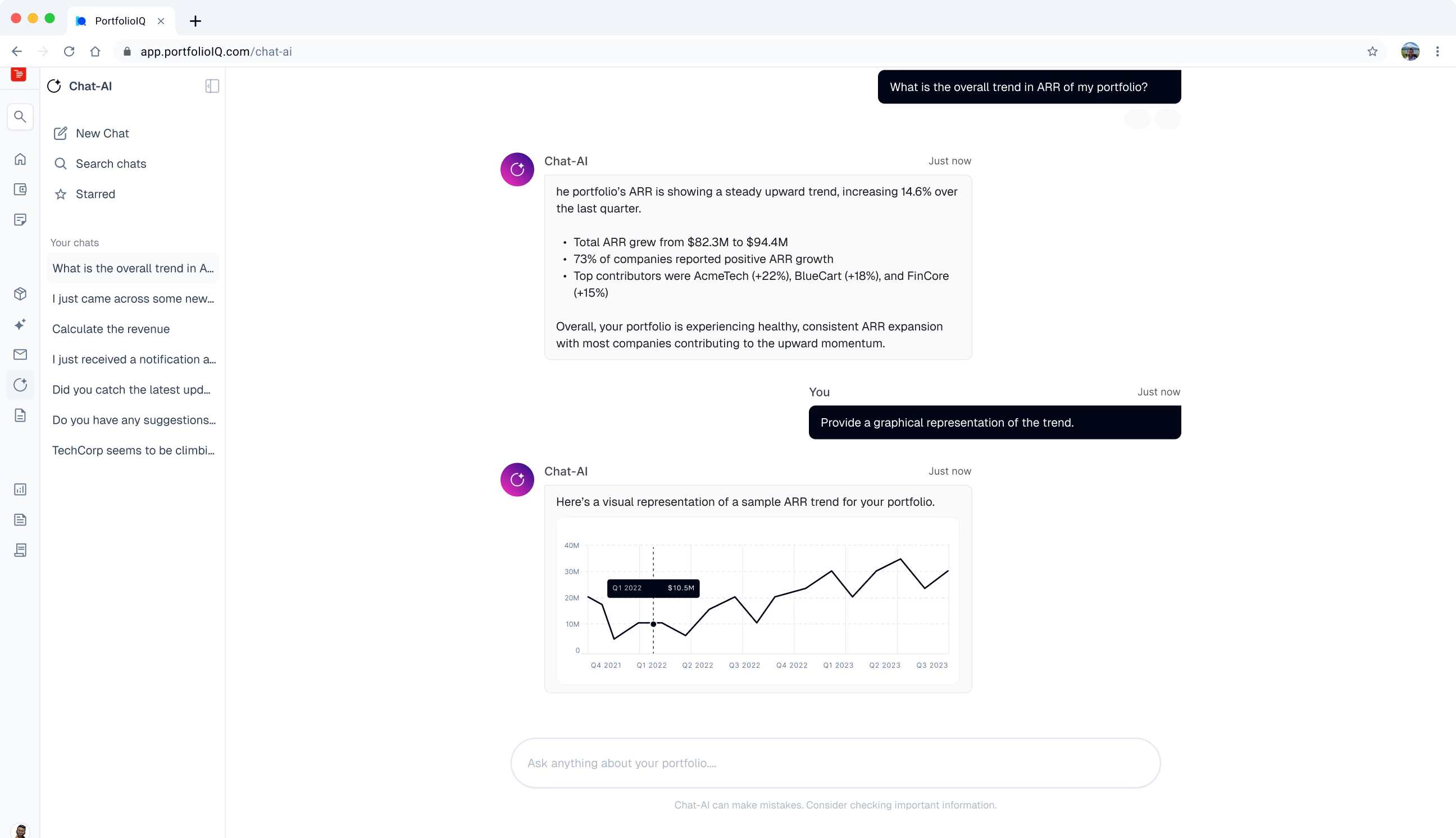
Both analysts and partners were skeptical of AI-generated numbers without seeing where they came from. A response that showed "ARR grew 14.6%" was not trusted on its own, but the same number with a company-by-company breakdown was accepted immediately.
Follow-up questions were as important as first questions
Almost every query led to a refinement: "now just Series B," "exclude the one outlier," "compare that to last quarter." A one-shot answer system would cover 20% of the real use case. Context retention across the conversation was essential.
Partners wanted autonomy, not reports
Partners weren't asking for better-formatted reports, they wanted to explore the data themselves, at their own pace, without scheduling a call with an analyst. The self-service aspect was the core value proposition for this user group.
Design Goals
Three goals shaped every design decision. They were chosen based on the research findings and validated against the team's constraints, a tight timeline, a shared codebase with the rest of PortfolioIQ, and a user base that was skeptical of AI features.
Zero-setup querying
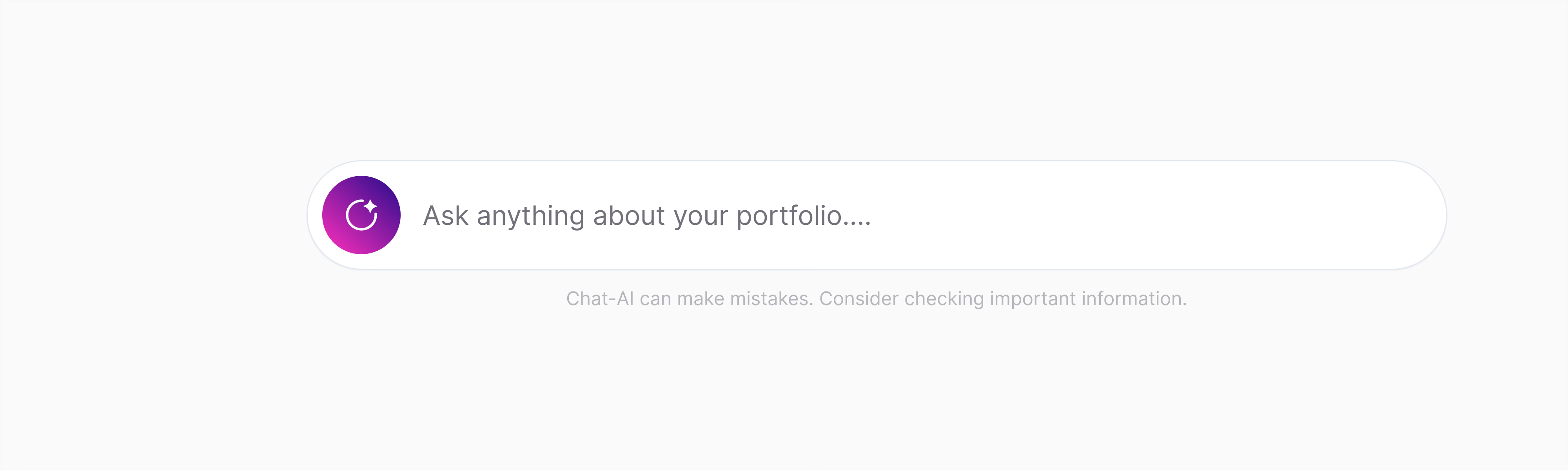
Analysts should be able to ask any question about portfolio data in plain English without knowing the underlying data schema. No SQL, no filters, no export steps, just a question and an answer.
Trustworthy responses with visible sources
Every answer needed to show its work, where the number came from, which companies contributed, and how confident the system was. An answer without a source would be treated like a hallucination, regardless of accuracy.
Progressive complexity
Simple questions should get simple answers. Complex ones should expand naturally, first a summary, then a chart, then a table, then a drill-down, without requiring the analyst to specify the format upfront.
Key Design Decisions
Several decisions shaped Chat-AI in ways that diverged from the obvious path. Each one came from a specific tension surfaced in research.
Chat interface over a new analytics dashboard
The obvious solution was a new BI dashboard, filters, saved views, charts. We rejected it. A new dashboard requires learning, configuration, and buy-in. A chat interface requires nothing: analysts already know how to ask questions. The interface disappeared and the data came forward.
Context retention within the conversation thread
Chat-AI remembers the thread of a conversation so analysts can ask follow-up questions without re-specifying context each time. "Now show me only Series B" works because the system knows what you were just looking at. Without this, users reverted to starting new queries and lost the exploratory value entirely.
Explicit uncertainty over false confidence
When the system doesn't have enough data to answer confidently, it says so explicitly, rather than fabricating a number. Early prototypes always returned an answer. Testing showed this destroyed trust faster than any other failure mode. Honest uncertainty built more credibility than confident inaccuracy.
Persistent chat history for institutional memory
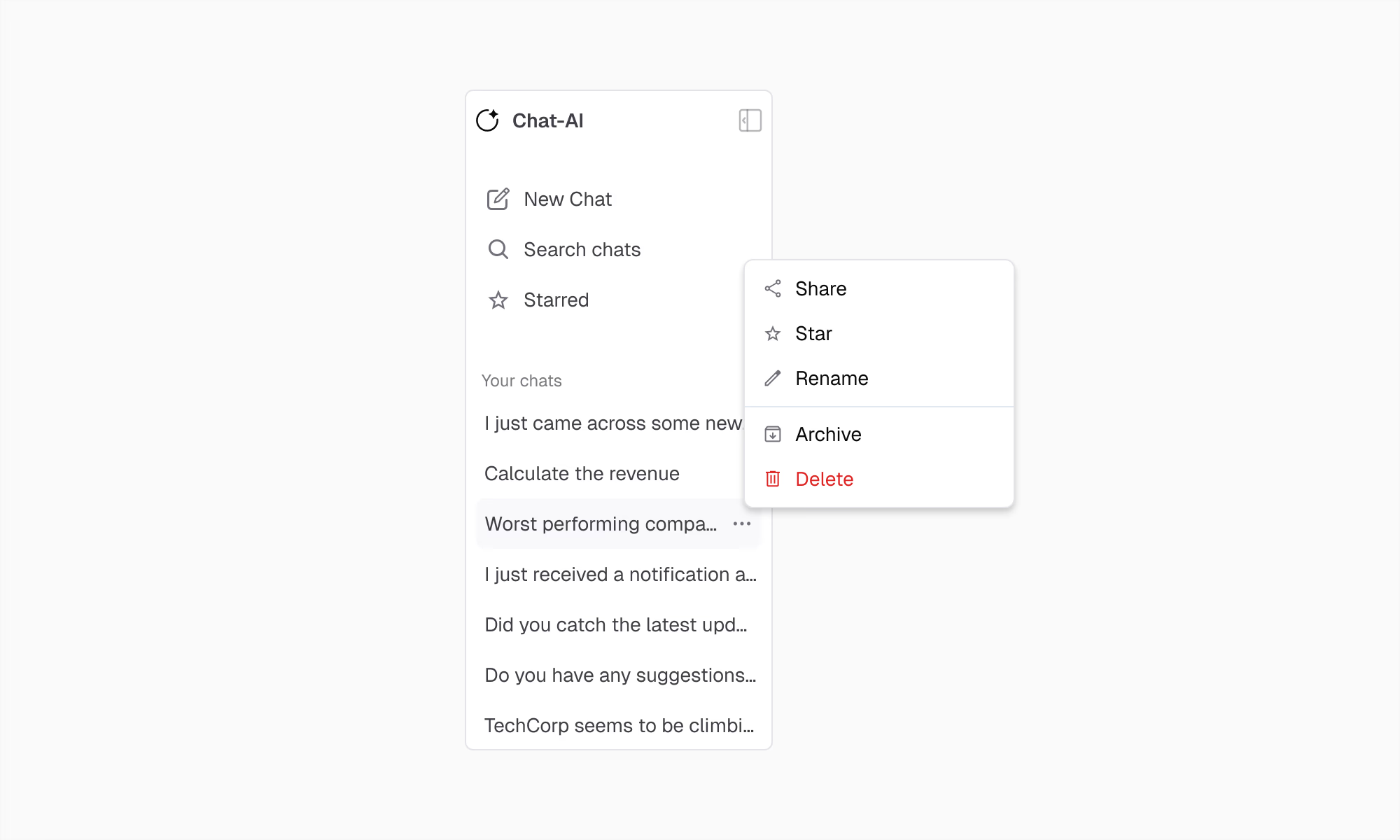
Conversations are saved, searchable, and shareable. An analyst who asked "What's our exposure to late-stage SaaS companies?" three weeks ago can find it, share it with a partner, and pick up where they left off, or see how the answer has changed with new data.
Outcome
Chat-AI became one of PortfolioIQ's most-used features within the first month of launch. Partners who previously had to request reports from analysts started querying the portfolio themselves, directly, at any hour, without scheduling a call.
Analyst-generated ad hoc reports dropped significantly as self-service usage increased. More importantly, the nature of meetings changed: instead of presenting pre-prepared data, analysts and partners started exploring questions together in real time, using Chat-AI as a shared thinking tool rather than a reporting layer.
Retrospective
The hardest part wasn't designing the chat interface, it was deciding what the system should say when it didn't know the answer. We went through four versions of the uncertainty state before landing on language that felt honest without feeling broken. The framing that worked: "I don't have enough data to answer this confidently, here's what I do know."
If I were doing this again, I'd invest more time in the onboarding experience. First-time users consistently under-used the feature because they didn't know what kinds of questions it could answer. A set of starter prompts tuned to each user's actual portfolio data, not generic examples, would have made the first session far more valuable.